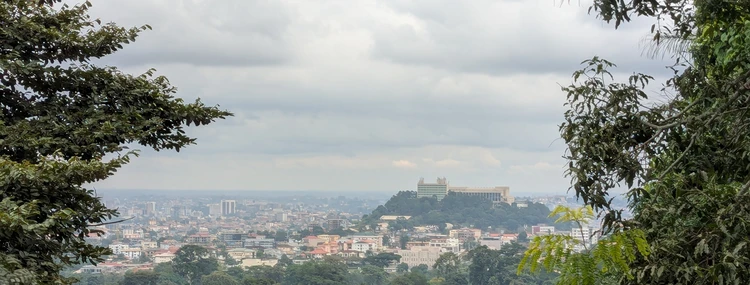
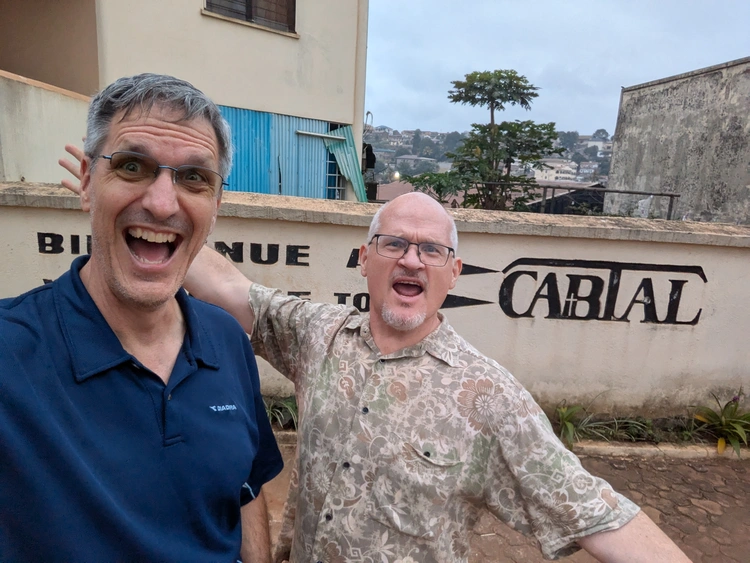
Trainers: Eric Seidlitz & Scott Turner
Participants: 25 individuals representing 13 languages
This was the third Kalaam workshop by Cameroonian Bible Translation and Literacy (CABTAL). The accommodations were excellent. We were each quite comfortable in our 3rd-floor apartments, supplied with a full kitchen. The internet was so-so. The weather was quite nice, with temperatures from 18-27° C (65-80° F).
We both arrived to Cameroon two days prior to the workshop, which was very helpful for resting and acclimating before day 1.
CABTAL provided bottled water and some groceries to start us off, but there is a grocery/department store about a 15-20 minute walk away. We also were driven to the large Carrefour after the first week of training to stock up our food supplies.
Venue Disruption
Every workshop is different, and yet each one has similarities to the others. One common feature of our workshops is that participants come from a wide range of skill levels. One participant at this workshop was a computer programmer, while another asked on day 1, "What is a website?" Another similarity that most workshops share is that something goes wrong. Fortunately, it's usually only one thing.
This time, it was the venue itself. Due to a miscommunication amongst the CABTAL staff, our main training room was double-booked and we were kicked out of it the second week. Not only that, but our participants' lodging was also double-booked, so they were shifted over to the nearby SIL compound for their acommodations.
Our second-week training room was a cramped room at the top of the apartment complex. Everyone fit, but just barely. It was dark, and the air did not circulate very well.
The Director of Technical Services did sit us down to formally apologize and ask forgiveness for what happened. It was a beautiful exchange which eased the frustrations we trainers were feeling.
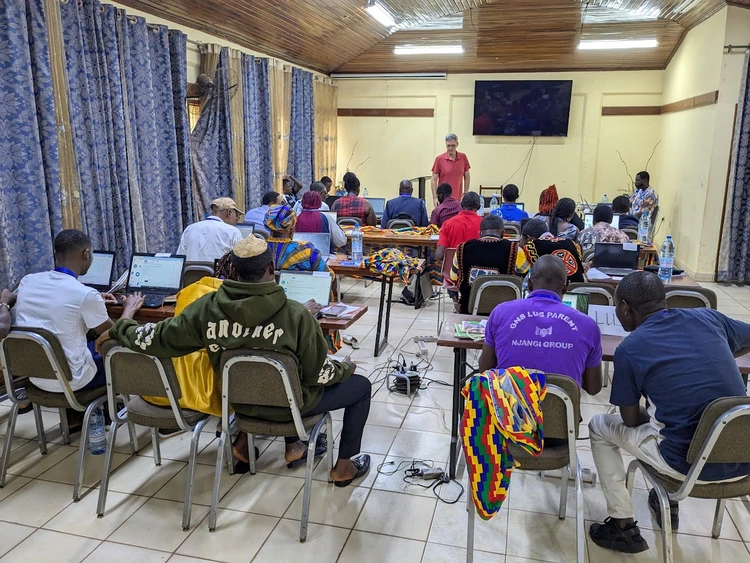
Week 1 Venue (the default)
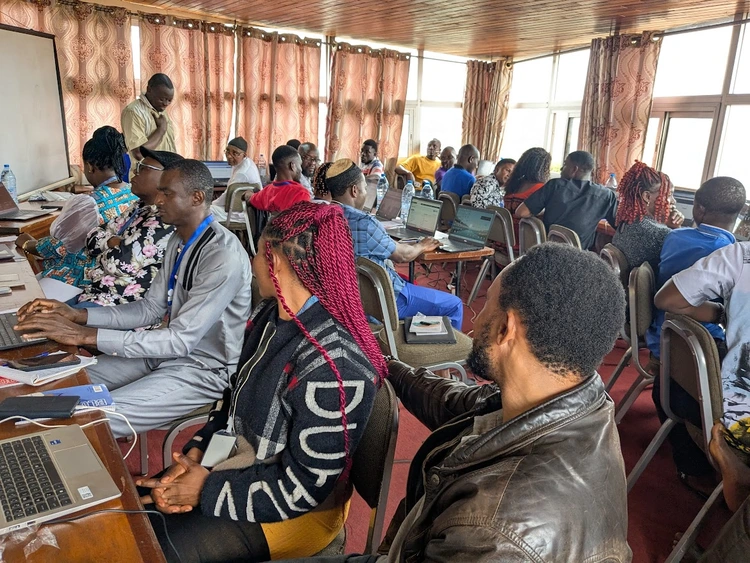
Week 2 Venue (the plan B)
The Workshop
As usual, the teaching plan for the workshop had to be held loosely, because we had to adjust based on the participants. A large frustration was that the participants came with very little website content. This is a common problem at workshops. We stated at least twice to the organizers to 1) have all the participants fill out a website request form and 2) make sure all the participants bring their media content with them. Neither of these things were done.
So in the beginning, we had to spend time having them fill out the website request forms. We then realized that we couldn't really teach all the media items if they didn't have media. Yes, we could teach with sample media, but that is messy for a number of reasons. Many participants had content on their phones, so we devoted a large chunk of time having them get their content from the phones to the computers. Once they did that, the workshop went much more smoothly.
The participants were very hard-working and diligent to build their sites. Their commitment to good work can be shown through the following story: We did a peer evaluation exercise, in which all the participants rotated around the room looking at all the other websites and making comments and suggestions. Afterwords, some of the reactions of the participants to certain comments were so loud and heated, it seemed like a fight might break out! We loved seeing that passion.
In the end, most of the websites had enough content to be ready to launch by the end of the workshop. CABTAL has informed us that they could still fill two more workshops (one in English and one in French), as they still have so many more language teams that don't have a website. We look forward to continued partnership with CABTAL!
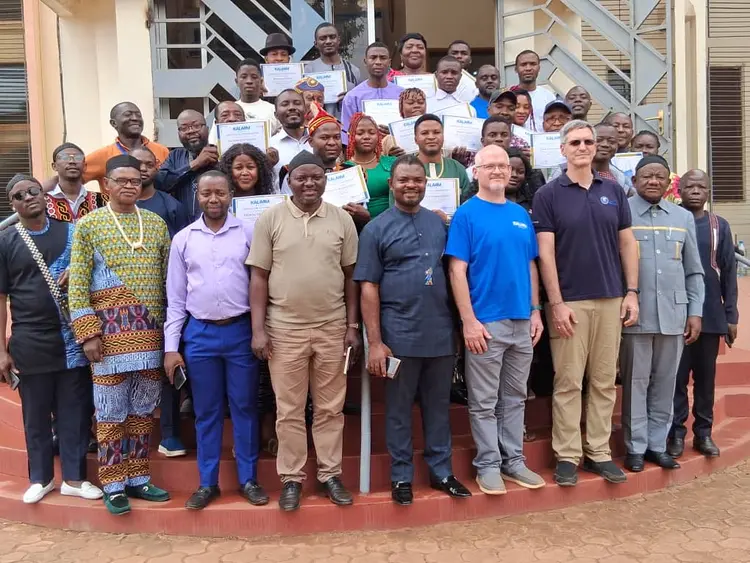
After the workshop
The matchbook was really handy for the workshop, because the internet was not great. Once the workshop finished, the teams were eager to see their websites launched. It took over a week until all the sites were able to be transferred from the Matchbook to the production servers, and even now we are still waiting on a few more things on the database before the final five sites can be launched.
We set up a WhatsApp group, connecting all the workshop participants and facilitators. We used it to let each other know when (and that) we reached home safely - many of the participants had to travel 8-10 hours or more over rough roads and at some risk of dangerous people along the way. From this point onwards, we hope participants will use the group to encourage each other, trade useful tips and remind each other to keep working on the websites.
Miscellaneous Observations by Scott
Food: Wow, quite different than I had experienced before. A lot of the starches had no seasoning: the corn mush, the cassava wrapped in banana leaves, etc. There was usually a spicy sauce on the side, or a chili you could add to spice it up - I didn't see salt. It was nice to have a good store nearby to "supplement" any meal I struggled with. On weekends, the participants were given 10,000 francs (about USD 17), and we facilitators had meals sent to our rooms. We did not get a menu. I think in the future, I would like to request them to just give breakfast items: rolls, yogurt, bananas, juice - and then let us fend for ourselves. I didn't want to eat most of the meals they gave, and there was no social reason to eat it alone in my room. Had we known they were going to bring us food, we would have told them on a couple occasions that we were going outside to eat, and some food/money would have been saved.
Going out: The CABTAL guest book in our rooms said not to go out alone, and not to go out at night at all. We did not experience any dangerous situation, but we did not usually go out alone.
Phone: I did not have roaming, so I bought a SIM card with data only. It was very comforting to have data when I went off campus, for the maps and for translation.
Language: Yaoundé is a very French-speaking place. Good to learn a few basics beforehand.


This is what they served us at CABTAL


This is what I ate when I was choosing...


