Host: Promotora Española de Lingüística (PROEL) / Fundación Sierra-Pambley
Dates: Tuesday 17th to Monday 23rd September 2024
Trainers: John Ventress & David Fetrow
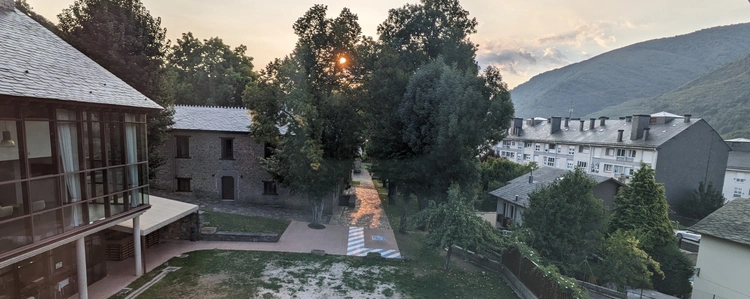
The workshop was held at the invitation of José Herrero, director of Spanish Wycliffe partner PROEL. We used their training facility in Villablino, courtesy of the Fundación Sierra-Pambley, and stayed at the adjoining guest house, the Albergue Francisco Giner de los Ríos.
Travel via Asturias airport on Sunday was uneventful, except for the disappearance of David's suitcase, which finally showed up on the last day of the workshop!
Participants arrived on Monday evening, ready to start work the following day. There were 6 participants in total, building 4 websites. One participant could only attend for the middle few days of the workshop. Infrastructure was good, meaning we could build websites online without the need for a Matchbook.
The projects
Jebli
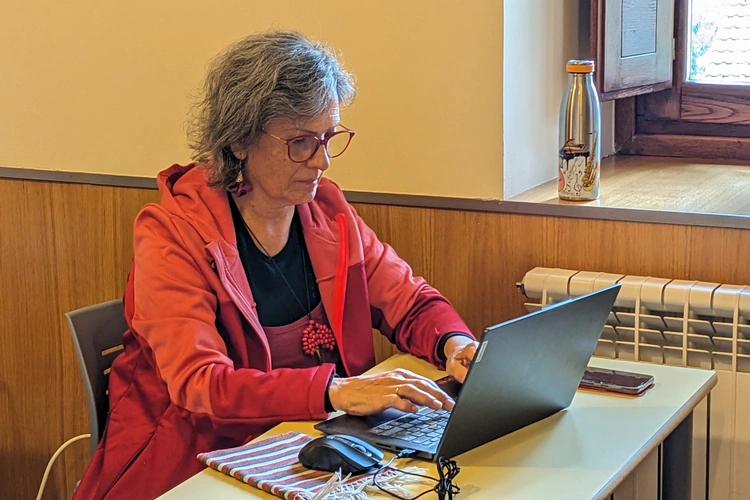
Jebala dialect of Moroccan Arabic – by some accounts, the second most widely spoken language in Spain. The WM is a Spanish national who has devoted her life’s work to this community, firstly in literacy, and latterly in helping to complete a New Testament translation, published in 2023. She told us that building a Scripture website was “the fulfilment of a lifelong dream” to make Scripture and literacy materials more widely available. Some of the material had never before been published, such as a complete Bible overview in text and audio with study guides.
Tahaggart Tamahaq
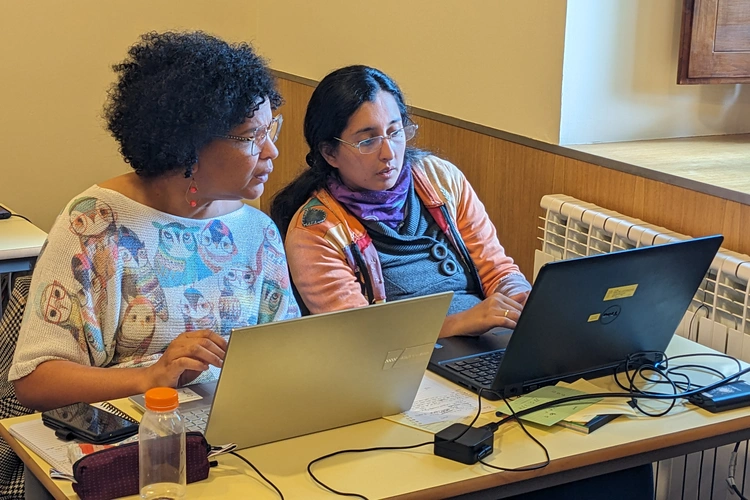
Tamashek Berber language spoken by the Tuareg of Algeria. The lead WM and her husband are based in Spain and have worked in literacy and Bible translation with this community since completing PROEL’s Master's program in 2008. The other WM is a translation consultant based in Europe and a member of the language community, but not yet a believer. The team worked briefly on their existing Scripture site at awalntenere.net, but their main focus was building a new language site promoting literacy in the traditional Tifinagh script. It features several hundred proverbs written in Tifinagh with equivalents in Latin and Arabic scripts.
Fa d’Ambu
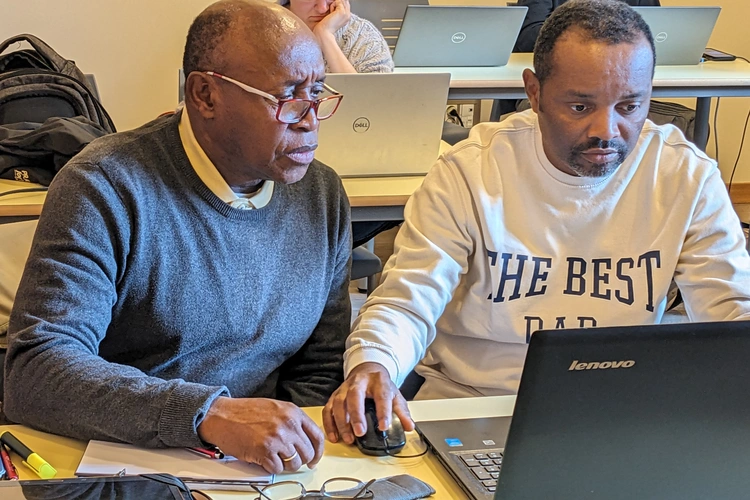
Creole spoken by the Ngué d’Ambu people of Equatorial Guinea. WM Bernardino, a Guinean pastor based in Spain and one of PROEL’s first Master’s graduates in 2005, led the NT translation until publication in 2022. He told us that “the thrill of building this website is second only to when we held the New Testament dedication.” Alongside Scripture and literacy, the site will include linguistics papers, which will help to validate the language development and translation work in the eyes of the community – important for Scripture Engagement. The website is aimed at locals, and a large diaspora in Africa and Europe. The second WM was only able to join for a few days.
PROEL linguistics site
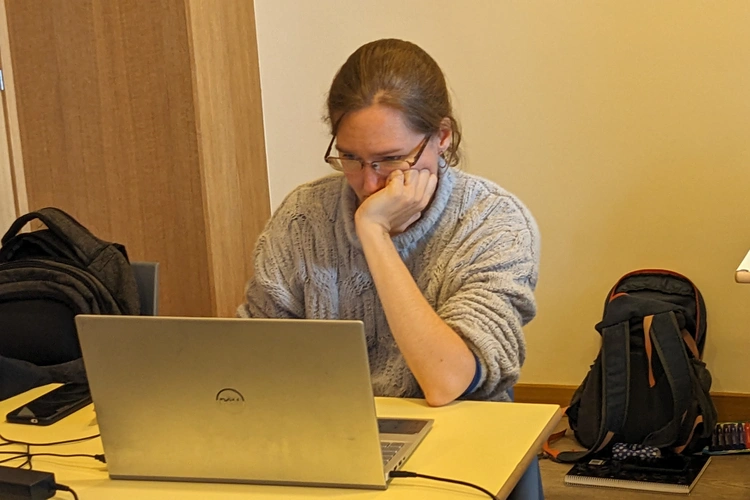
This is a longer-term project to replace PROEL’s current linguistics site, which gets hundreds of thousands of hits per year. It is heavily used by linguistics faculties, but is very old, looks dated, and is hosted on an obsolete platform with security issues. The WM has excellent IT, web design and graphic design skills. However, transferring 5000 pages with hundreds of interactive maps to Wildfire is quite a task, and still being assessed for feasibility.
The workshop
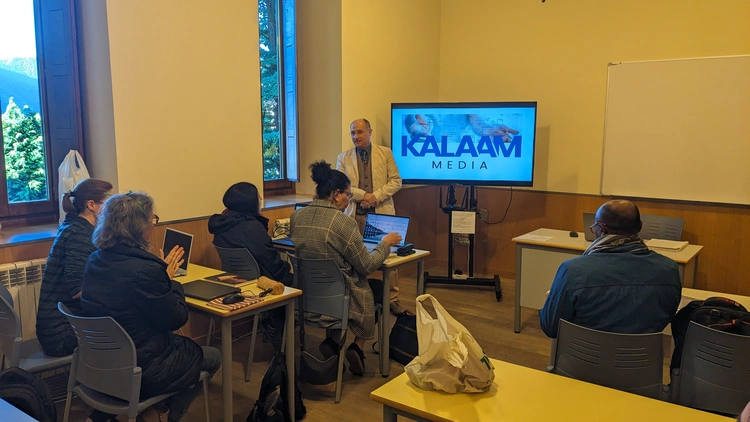
Day 1 (Tuesday): After an abridged presentation of internet basics, we got participants to think carefully about their intended audience, before listing all their content on index cards and organising it into categories. Each WM then presented their plan to the whole group. This worked well. One WM said, “This activity made me realise I can include all kinds of things that I hadn’t even thought about.”
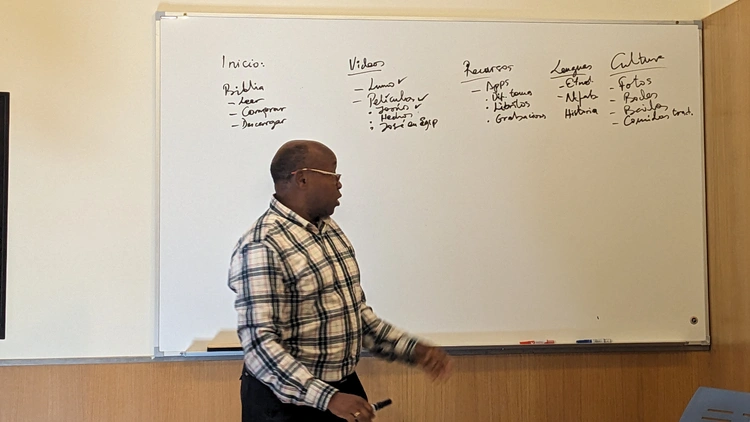
After lunch we walked them through the log-in process and initial set-up in Wildfire, showed them some essentials from the Wildfire menu, then helped them to create their entire menu structure in Wildfire. It was a very motivating way to end Day 1, and participants left with a real sense of achievement.
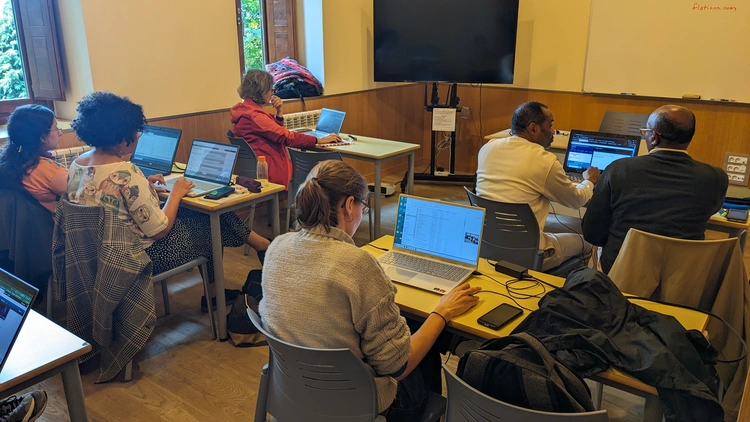
Day 2 began with the basics of page layout (sections and columns), during which we deconstructed some real web pages, and then introduced wireframing. Participants sketched their first simple page before learning how to add text blocks and image blocks, and then began building a page.
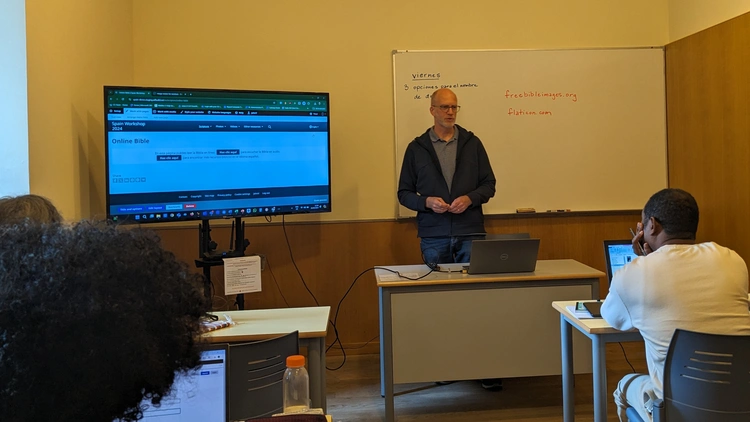
For the rest of Day 2 until Friday (Day 4), we gradually worked through the main topics, alternating teaching and work time, in the following order: Images, Image with text, Pdfs & downloadable files, Audio items, Video items, Hyperlinks & buttons, Translating content, Galleries & slideshows. This order seemed to make good logical sense based on the content that the teams wanted to publish, and frequent work times on real (rather than dummy) pages helped them to make steady progress.
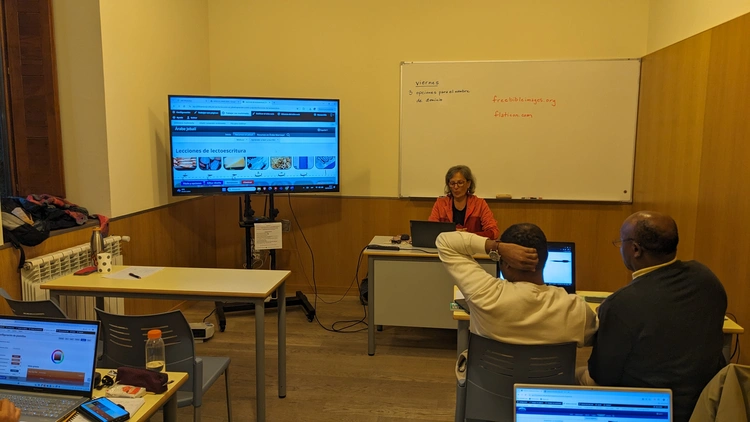
The last session on Friday was set aside for a Show & Tell. As expected, this goal encouraged teams to work hard, and they were motivated by seeing each other’s work.
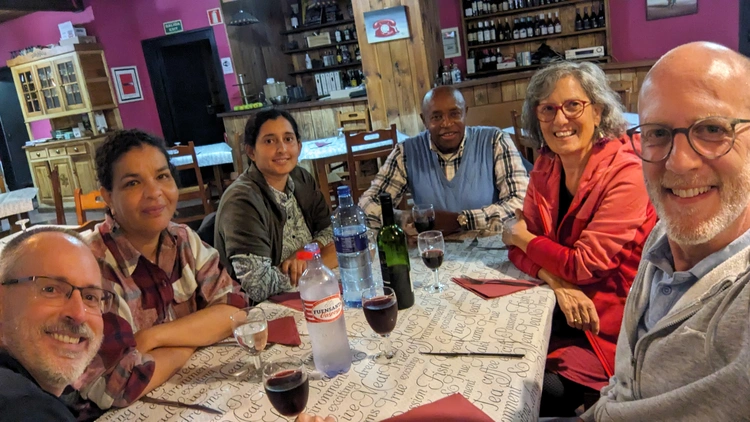
We left home pages until Day 5 (Saturday), when teams already had a good amount of content elsewhere on their site. As on Day 2, we looked at some real sites and broke them down into sections and blocks. Most of the day was work time, but we briefly introduced OSAs, Verse of the Day, and Google Maps. The guest house had arranged for us to eat out on Saturday evening, which was a great way to finish the week before a rest day on Sunday and the final stretch on Monday.
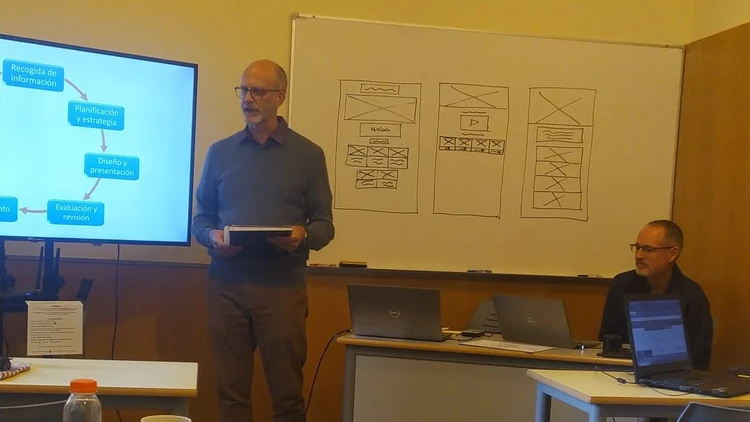
After auditing the sites at the weekend, we got the teams to implement any changes on Day 6 and finish their best pages ready for a presentation and celebration at the end of the afternoon.
In hindsight we would not have left interface translations until near the end. With so few days available, covering this earlier always felt like an unhelpful distraction. However, springing it on them when the closing ceremony was looming caused a fair amount of stress, even though participants knew we were not going to be finished and ready to launch. It also highlighted how confusing and time-consuming some aspects of the interface translation are, and the value of asking teams (where possible) to provide translations ahead of time as part of their pre-workshop preparation.
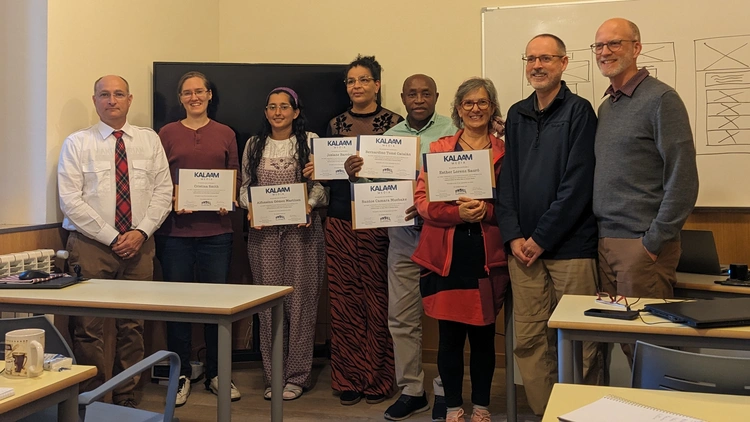
Several guests came for the closing session – most related to PROEL, but also the pastor from the church in Ponferrada with his family. There was a sense of real joy (mixed with relief!) from the participants, who all said they found it hard to believe that in less than a week they had managed to create a website that was almost ready to launch – something they could not have imagined when they started. The certificates were certainly all well earned!
Photo gallery


